New Deals Added Daily. Browse 9,000+ products including — electronics, vintage decor, apparel, tools & more — all inspected, priced to move, and ready to ship.
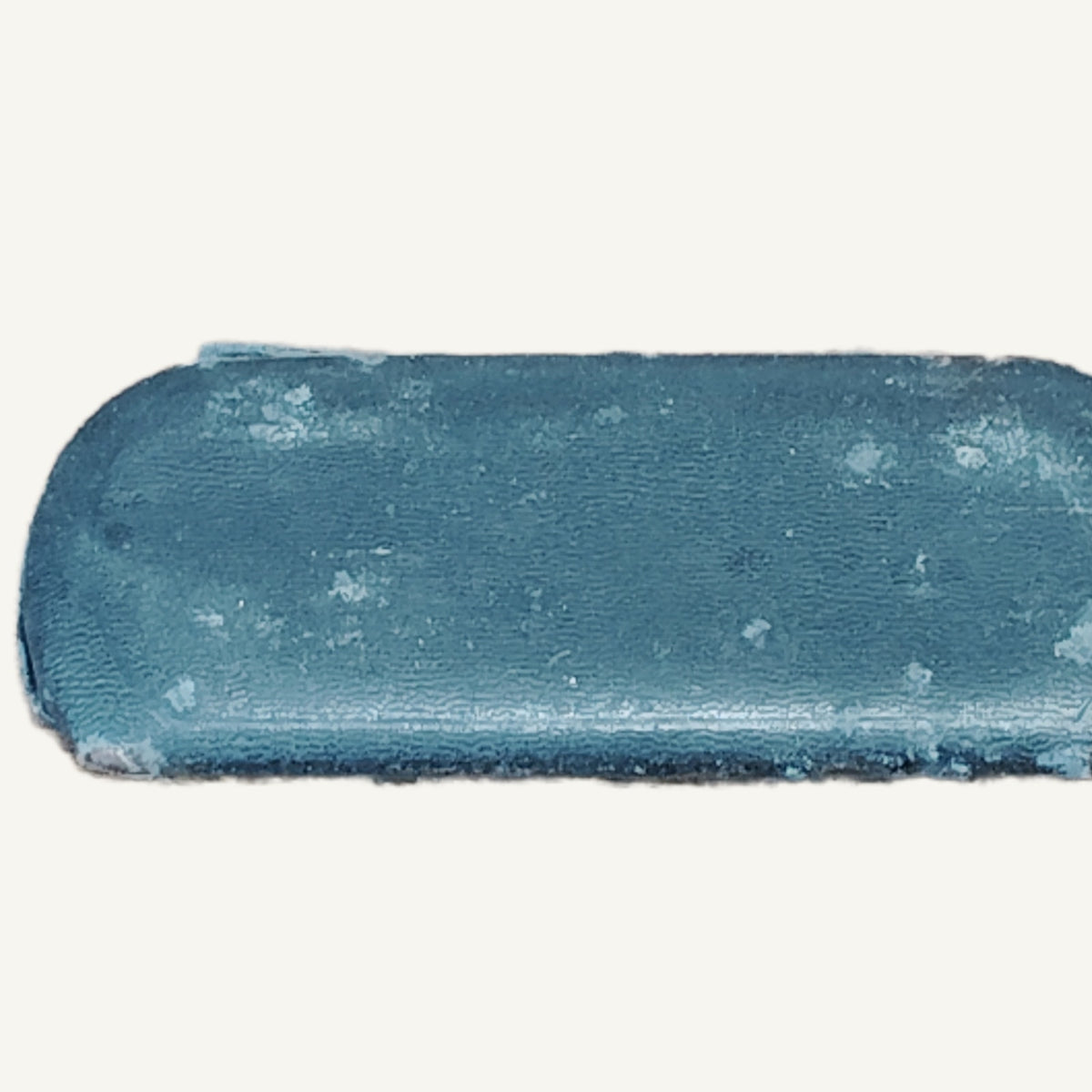
• Goldtone wire frames with rounded oval lenses for a classic vintage look. • Features flexible wire ear hooks and yellowed nose pads, indicative of age. • Includes original blue hard case with a textured exterior and velvet interior. • Mid-century optical design, likely from the 1920s-1930s era.
Bakelite Nose Pads: The most defining feature is the mustard-yellow/amber nose pads. Early spectacles (Victorian/Edwardian) lacked nose pads entirely, using a "saddle bridge" that rested directly on the face. Adjustable nose pads made from Bakelite (an early synthetic plastic) or celluloid were introduced in the 1920s
Cable Temples (Riding Bows): The flexible, curved metal wire arms wrap fully behind the ears. Popularized in the late 19th century to prevent glasses from slipping off during activities like riding horses, they continued to be paired with early nose-pad designs through the 1930s.
Frame Style: Archetypal of American Optical or Shuron designs from the interwar period.